
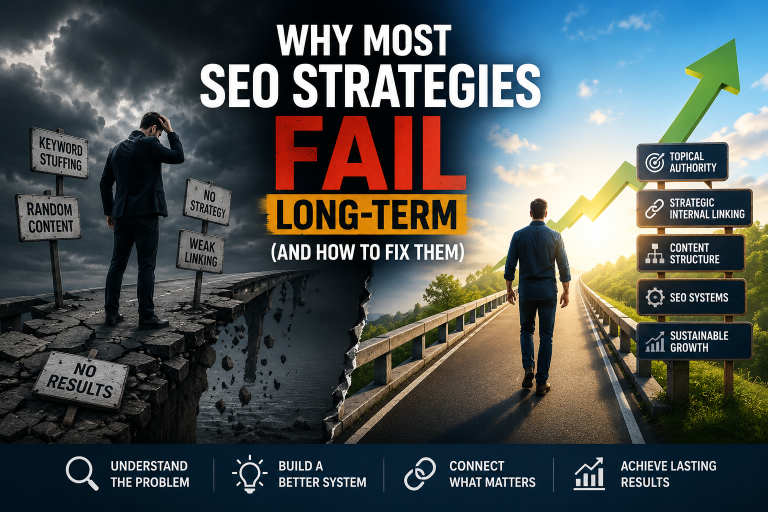
Most SEO strategies do not fail because businesses stop publishing content.
They fail because the entire system behind the content is weak.
Many websites spend months — sometimes years — creating articles, targeting keywords, and chasing rankings, only to see inconsistent results or sudden traffic declines later.
The problem is rarely just content quantity.
In many cases, the real issue is the lack of:
- structure
- topical consistency
- internal linking
- semantic organization
- long-term scalability
In this article, we’ll explain why most SEO strategies eventually break down and what sustainable SEO actually looks like in modern search engines.
Why Traditional SEO Strategies Struggle
Many SEO strategies are still based on outdated assumptions.
For years, websites focused heavily on:
- exact-match keywords
- publishing volume
- backlink quantity
- isolated article optimization
While some of these factors still matter, Google’s algorithms now evaluate websites much more contextually.
Search engines increasingly analyze:
- topic relationships
- semantic relevance
- content organization
- authority signals
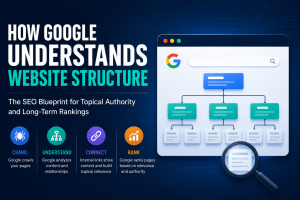
- website structure
This means older SEO approaches often become unstable over time because they lack foundational consistency.
The Problem With “Publish More Content”
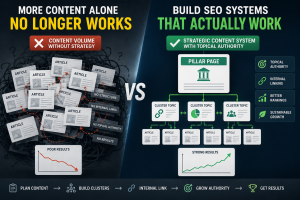
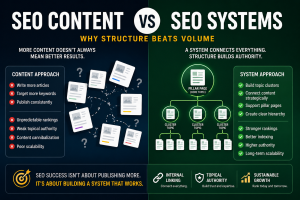
One of the biggest misconceptions in SEO is the idea that more content automatically leads to more rankings.
In reality, publishing large amounts of disconnected content often creates:
- diluted authority
- overlapping topics
- keyword cannibalization
- weak semantic relevance
Many websites continuously add articles without building clear relationships between them.
This creates isolated pages instead of connected topic ecosystems.
Modern SEO rewards depth and organization far more than random volume.
👉 Related Reading:
SEO Without Structure
A surprising number of websites operate without any real content structure.
Articles are published randomly based on:
- trending keywords
- short-term opportunities
- isolated search volume
The result is often chaotic architecture.
Without clear structure, Google may struggle to understand:
- what your website specializes in
- which pages matter most
- how topics relate
- where authority should flow
This is one reason why some smaller websites consistently outperform larger competitors.
Structure creates clarity.
👉 Related Reading:
Weak Topical Authority
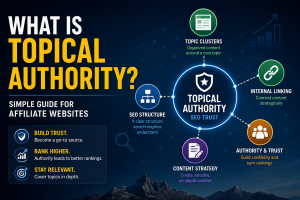
Topical authority has become one of the most important concepts in modern SEO.
Google increasingly rewards websites that demonstrate:
- depth
- consistency
- expertise
- semantic coverage
Unfortunately, many SEO strategies focus only on individual keywords rather than broader topic ownership.
For example:
A website publishing one article about:
- internal linking
- semantic SEO
- topical authority
- website structure
is much weaker than a website building a fully connected cluster around those subjects.
Authority grows through relationships between pages — not isolated content alone.
👉 Related Reading:
Internal Linking Mistakes
Internal linking is one of the most overlooked areas of SEO.
Many websites:
- barely use internal links
- add them randomly
- ignore hierarchy completely
This weakens:
- crawlability
- authority distribution
- semantic understanding
- topic reinforcement
Strong internal linking helps Google:
- understand relationships
- identify important pages
- recognize topical clusters
- distribute authority strategically
Without proper internal linking, even great content can remain disconnected and underperform.
👉 Related Reading:
Why Random Keyword Targeting Fails
Another major reason SEO strategies fail long-term is keyword fragmentation.
Many businesses chase:
- high-volume keywords
- trending phrases
- unrelated opportunities
without considering how those topics fit together strategically.
This creates:
- inconsistent topical signals
- diluted authority
- unclear positioning
Modern SEO increasingly rewards websites with:
- focused expertise
- semantic consistency
- connected content systems
Trying to rank for everything often weakens overall authority.
The Scalability Problem
A weak SEO foundation becomes harder to manage over time.
As websites grow, problems multiply:
- content overlap
- orphan pages
- weak navigation
- inconsistent hierarchy
- indexing inefficiencies
This is why many websites experience:
- traffic stagnation
- unstable rankings
- declining organic growth
The larger the site becomes, the more important structure becomes.
Scalable SEO requires systems — not random publishing.
What Sustainable SEO Looks Like
Sustainable SEO focuses on building long-term authority rather than chasing temporary ranking spikes.
Modern sustainable SEO usually includes:
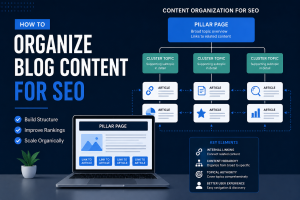
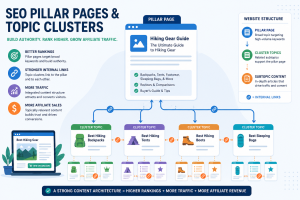
- topic clusters
- strategic internal linking
- semantic relevance
- pillar pages
- clear content hierarchy
- focused topical expertise
Instead of publishing disconnected articles, successful websites create interconnected ecosystems around core subjects.
This strengthens:
- authority
- crawlability
- user experience
- ranking stability
Building SEO Systems Instead of SEO Campaigns
One of the biggest mindset shifts in modern SEO is moving from:
❌ campaigns
to:
✔ systems
Campaigns are temporary.
Systems compound over time.
A strong SEO system creates:
- connected content
- scalable architecture
- authority reinforcement
- strategic organization
This is why websites with smaller content libraries but stronger structure often outperform massive websites publishing random content at scale.
SEO systems focus on:
- relationships
- hierarchy
- semantic depth
- long-term consistency
Practical Signs Your SEO Strategy Is Weak
Some common warning signs include:
- traffic plateaus despite publishing more content
- articles not ranking consistently
- poor internal linking
- overlapping topics
- unclear content hierarchy
- low topical depth
- isolated blog posts
These issues usually point to structural weaknesses rather than simple keyword problems.
How to Improve Long-Term SEO Stability
Improving SEO sustainability often starts with simplifying and organizing your structure.
Focus on:
- core topics
- topic clusters
- semantic relevance
- stronger internal linking
- content hierarchy
- authority consolidation
Often, the solution is not creating more content immediately — but improving how existing content works together.
SEO Growth Requires More Than Content Volume
Many websites publish content consistently but still struggle to build lasting SEO momentum.
The issue is often not effort — but structure.
Without:
- internal linking
- topical organization
- semantic consistency
- scalable architecture
SEO growth eventually becomes unstable.
👉 Brisk Web Services helps businesses build connected SEO systems designed for long-term authority and sustainable organic growth.
Conclusion
Most SEO strategies fail long-term because they focus too heavily on short-term tactics instead of sustainable structure.
Modern search engines increasingly reward websites with:
- clear organization
- topical authority
- semantic depth
- strong internal linking
- connected content ecosystems
Publishing more articles alone is no longer enough.
The websites that win long-term are usually the ones that build systems — not isolated SEO campaigns.
As Google continues evolving toward contextual understanding, structure and relationships will only become more important over time.

One Response
Good post! We will be linking to this particularly great post on our site. Keep up the great writing