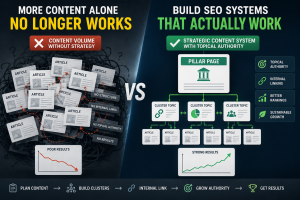
Many websites publish content consistently but still struggle to achieve strong long-term SEO results.
The issue is often not content quality.
Instead, the problem is usually poor organization.
Without clear structure, even valuable content can become:
- disconnected
- difficult to navigate
- semantically weak
- harder for Google to understand
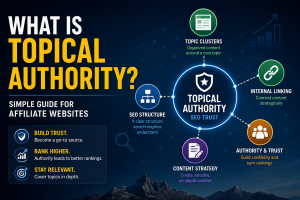
Modern SEO increasingly rewards websites that organize content strategically around topics, relationships, and authority signals.
In this guide, we’ll explain how to organize blog content for SEO using topic clusters, pillar pages, internal linking, and semantic structure to improve rankings and scalability.
Table of Contents
Why Blog Organization Matters for SEO
Many websites treat blogging as a content production activity rather than a structured SEO system.
Articles get published randomly based on:
- inspiration
- keyword tools
- trends
- isolated search opportunities
Over time, this often creates:
- fragmented authority
- overlapping topics
- weak hierarchy
- poor semantic clarity
Google increasingly tries to understand websites contextually.
This means organization matters more than ever.
A well-structured blog helps search engines understand:
- your expertise
- topic relationships
- authority signals
- content hierarchy
Without organization, even strong content can struggle to perform consistently.
How Google Understands Blog Structure
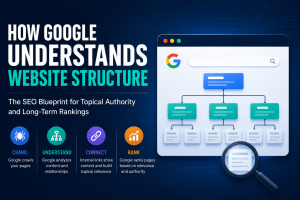
Modern Google does not evaluate pages completely independently anymore.
Instead, search engines analyze:
- semantic relationships
- internal linking
- topic consistency
- hierarchy
- contextual relevance
Google attempts to understand:
- which pages are most important
- how topics connect
- what your website specializes in
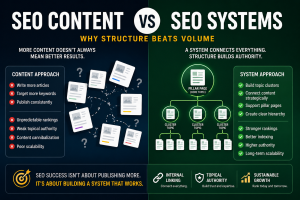
This is why websites with fewer but better-organized articles often outperform websites publishing large amounts of disconnected content.
👉 Related Reading:
The Problem With Random Publishing
Random publishing creates weak SEO ecosystems.
For example:
A website publishes:
- one article about SEO
- one article about gaming laptops
- one article about email marketing
- one article about cryptocurrency
without any strategic relationships between them.
This weakens:
- topical authority
- semantic relevance
- crawl efficiency
- authority concentration
Modern SEO increasingly rewards focus and connected expertise rather than scattered content production.
Organizing Content Around Topics
Strong SEO blogs are usually organized around:
core topics.
Instead of publishing completely unrelated articles, successful websites build connected systems around specific expertise areas.
For example:
Core Topic
SEO Systems
Supporting Topics
- internal linking
- topic clusters
- website structure
- topical authority
- semantic SEO
- content hierarchy
This creates stronger semantic signals and clearer expertise positioning.
👉 Related Reading:
What Are Topic Clusters?
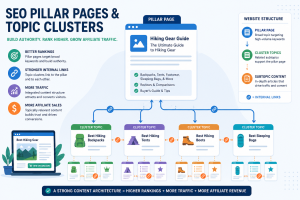
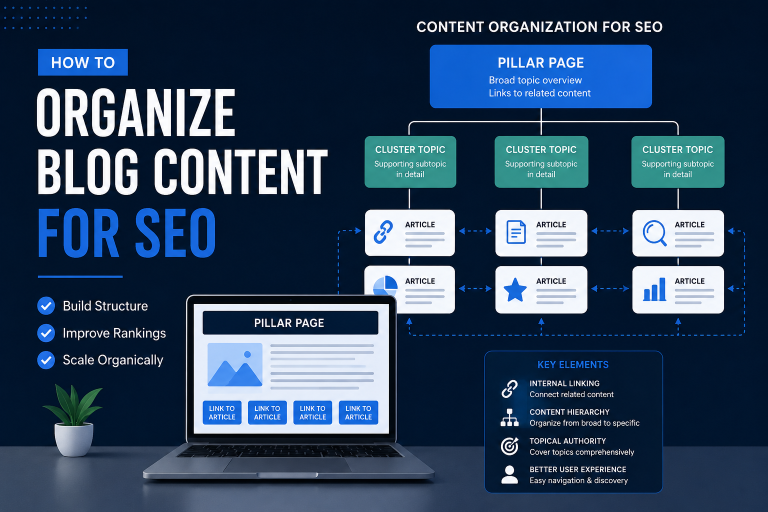
Topic clusters are groups of related articles connected around a broader pillar topic.
For example:
Pillar Topic
Website Structure SEO
Cluster Articles
- Internal Linking Strategy
- Topic Clusters Explained
- Pillar Pages
- SEO Scalability
- Topical Authority
This structure helps:
- strengthen semantic relevance
- improve crawlability
- reinforce expertise
- distribute authority strategically
Instead of isolated articles competing independently, the content works together as a connected ecosystem.
👉 Related Reading:
Pillar Pages and Content Hierarchy
Pillar pages help organize broad topics into clear hierarchy structures.
A pillar page acts as:
- a central authority resource
- a navigation hub
- a semantic anchor
Supporting articles then expand on subtopics in more detail.
For example:
Homepage
→ SEO Category
→ Pillar Page
→ Supporting Articles
This creates:
- stronger crawl paths
- better organization
- clearer authority signals
Without hierarchy, blogs often become difficult for both users and Google to interpret.
The Importance of Internal Linking
Internal linking is one of the most important structural SEO signals.
Every internal link helps Google understand:
- relationships between pages
- hierarchy
- semantic relevance
- authority distribution
A strong blog structure should:
- connect related content naturally
- reinforce topic clusters
- surface older content strategically
For example:
An article about:
“Topical Authority”
should naturally connect with:
- internal linking
- pillar pages
- website structure
- semantic SEO
This creates stronger contextual relationships throughout the website.
👉 Related Reading:
How Categories Should Work
Categories should support your core topical structure.
Many websites create too many categories, which weakens clarity.
Instead:
- keep categories focused
- align them with core expertise areas
- avoid unnecessary fragmentation
For example:
✔ SEO Systems
✔ Content Strategy
✔ Website Structure
is stronger than:
❌ SEO Tips
❌ Random Marketing
❌ Business Ideas
❌ Miscellaneous
Focused categories improve:
- navigation
- semantic organization
- crawl efficiency
Content Mapping for SEO
Content mapping means planning how pages relate before publishing.
Instead of writing articles randomly, map:
- pillar pages
- cluster topics
- internal links
- supporting content
This creates intentional structure rather than accidental organization.
Strong content mapping improves:
- scalability
- topical depth
- authority reinforcement
- long-term SEO consistency
Common Blog Organization Mistakes
Many blogs unintentionally weaken their SEO through poor organization.
Common mistakes include:
1. Publishing Without Structure
Articles remain disconnected and isolated.
2. Weak Internal Linking
Important relationships between topics never get reinforced.
3. Too Many Unrelated Topics
Trying to rank for everything weakens expertise signals.
4. Poor Category Systems
Overcomplicated categories confuse hierarchy.
5. No Pillar Strategy
Without central authority pages, content lacks semantic anchors.
How to Build a Scalable Content Structure
Scalable SEO requires:
- organization
- hierarchy
- semantic consistency
- internal linking
- focused expertise
Instead of endlessly publishing disconnected content, focus on building:
connected topic ecosystems.
Over time, this helps:
- strengthen authority
- improve rankings
- improve crawlability
- create sustainable SEO growth
Great Content Needs Great Structure
Publishing more articles alone is no longer enough for sustainable SEO growth.
Without:
- topic organization
- internal linking
- semantic relationships
- clear hierarchy
Google may struggle to fully understand your expertise.
👉 Brisk Web Services helps businesses build connected SEO systems designed for scalability, authority, and long-term organic growth.
Conclusion
Modern SEO increasingly rewards websites that organize content strategically.
Strong blog organization helps search engines understand:
- expertise
- topical relationships
- hierarchy
- semantic relevance
Instead of treating articles as isolated pages, successful websites build connected ecosystems using:
- topic clusters
- pillar pages
- internal linking
- scalable structure
As search engines continue evolving toward contextual understanding, organized content architecture will become even more important for long-term SEO success.