Affiliate websites often publish large amounts of content in an attempt to increase rankings, traffic, and conversions. However, many of these websites struggle to achieve long-term SEO growth despite consistent publishing.
The reason is often not content quality.
Instead, the problem is usually structure.
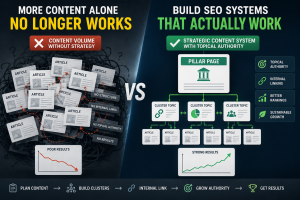
Modern SEO increasingly rewards websites that organize content strategically through topic clusters, semantic relationships, and clear authority signals. One of the most important components of this approach is the pillar page.
In this guide, we’ll explain what pillar pages are, why they matter for affiliate websites, and how they help build stronger topical authority and long-term SEO scalability.
Table of Contents
What Is a Pillar Page?
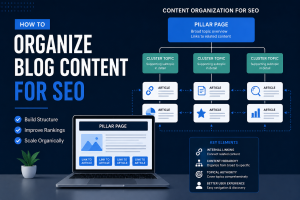
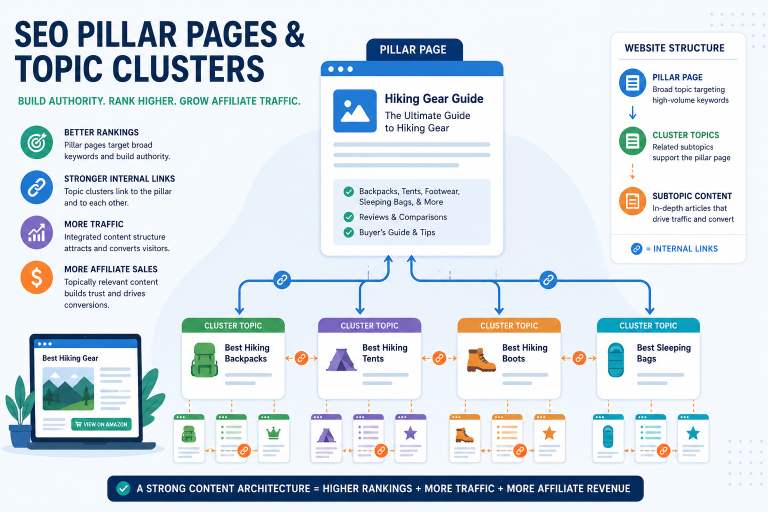
A pillar page is a comprehensive piece of content that broadly covers a core topic while linking to multiple related supporting articles.
Think of a pillar page as the central hub of a content cluster.
For example:
Pillar Topic
Affiliate SEO
Supporting Articles
- Internal Linking Strategies
- Topic Clusters Explained
- Topical Authority
- SEO Systems
- Website Structure
The pillar page provides the big-picture overview, while supporting articles explore subtopics in greater depth.
This creates a connected content ecosystem rather than isolated blog posts competing independently.
Why Pillar Pages Matter for Affiliate Websites
Affiliate websites often face intense competition.
Many niches contain thousands of websites targeting similar keywords and products.
This means random content publishing is rarely enough anymore.
Pillar pages help affiliate websites:
- organize content strategically
- improve semantic relevance
- strengthen internal linking
- build topical authority
- improve crawlability
- scale SEO more effectively
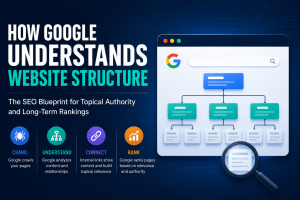
Google increasingly attempts to understand expertise contextually.
A strong pillar structure signals that your website genuinely covers a topic comprehensively.
👉 Related Reading:
Pillar Pages vs Regular Blog Posts
Many affiliate websites treat every article equally.
This creates flat website architecture where no clear hierarchy exists.
Pillar pages are different because they:
- cover broad topics comprehensively
- act as central authority resources
- organize related content
- distribute authority strategically
Meanwhile, supporting blog posts focus on:
- narrower subtopics
- specific questions
- detailed tactical information
For example:
Pillar Page
Complete Guide to Affiliate SEO
Supporting Articles
- Internal Linking for Affiliate Websites
- Best Content Structures for Affiliate SEO
- Topic Clusters for Affiliate Sites
- SEO Scalability Strategies
This structure creates stronger topical relationships across the website.
How Pillar Pages Improve SEO
Pillar pages strengthen SEO in several important ways.
1. Improved Topical Authority
Google increasingly rewards websites that demonstrate:
- expertise
- depth
- semantic coverage
- topical consistency
Pillar pages help consolidate authority around core topics.
👉 Related Reading:
2. Better Internal Linking Structure
Pillar pages naturally create stronger internal linking systems.
Supporting articles link back to the pillar page while the pillar page links outward to cluster content.
This improves:
- crawlability
- semantic understanding
- authority distribution
3. Improved User Experience
Visitors can navigate topics more logically.
Instead of jumping between disconnected articles, users move through organized content pathways.
This often improves:
- time on site
- engagement
- content discovery
4. Stronger Content Hierarchy
Pillar pages create clear website hierarchy.
Google can better understand:
- which topics matter most
- how pages connect
- where authority should flow
Pillar Pages and Topic Clusters
Pillar pages and topic clusters work together.
Without supporting cluster content, pillar pages may appear shallow.
Without pillar pages, clusters may feel fragmented.
Together, they create:
- semantic relationships
- stronger authority signals
- scalable content systems
For example:
Pillar Page
SEO Systems for Affiliate Websites
Supporting Cluster Articles
- Website Structure SEO
- Internal Linking
- Topic Clusters
- Topical Authority
- Sustainable SEO Strategies
This structure reinforces topical expertise far more effectively than random standalone articles.
The Role of Internal Linking
Internal linking is one of the most important parts of successful pillar page strategy.
Every supporting article should:
- link back to the pillar page
- connect contextually to related cluster content
- reinforce semantic relationships naturally
This helps Google understand:
- hierarchy
- topic relationships
- authority flow
Strong internal linking also helps:
- surface older content
- improve indexing
- strengthen rankings
- reduce orphan pages
One of the biggest SEO mistakes is publishing content without integrating it into a larger content system.
How to Structure a Pillar Page
A good pillar page should:
- cover a broad topic comprehensively
- organize information clearly
- link to supporting articles naturally
- maintain logical hierarchy
Typical structure includes:
- overview sections
- subtopic summaries
- contextual internal links
- navigation clarity
- related content sections
The goal is not simply writing long content.
The goal is building organized authority.
Examples of Pillar Pages for Affiliate Websites
Some strong pillar page examples include:
Affiliate SEO
Supporting topics:
- internal linking
- content clusters
- topical authority
- SEO scalability
Best Gaming Laptops
Supporting topics:
- budget gaming laptops
- gaming laptop comparisons
- GPU buying guides
- gaming accessories
Smart Home Devices
Supporting topics:
- smart lighting
- smart thermostats
- security systems
- home automation setups
Each cluster reinforces the broader pillar strategically.
Common Pillar Page Mistakes
Many websites misunderstand pillar pages completely.
Common mistakes include:
1. Creating Pillars Without Supporting Content
A pillar page without cluster articles lacks depth.
2. Weak Internal Linking
Without strategic linking, semantic relationships weaken significantly.
3. Covering Too Many Unrelated Topics
Trying to turn one pillar page into multiple topics creates confusion.
4. Treating Pillar Pages Like Ordinary Articles
Pillar pages should function as authority hubs, not isolated posts.
5. Ignoring Content Hierarchy
Poor organization weakens crawlability and authority flow.
How to Build Pillar Pages Strategically
Successful pillar strategies usually begin with:
- identifying core topics
- building supporting clusters
- improving internal linking
- strengthening semantic relevance
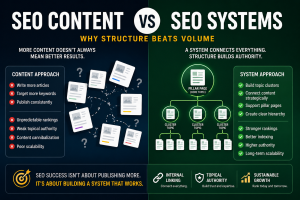
Instead of publishing random content endlessly, focus on building connected systems around specific expertise areas.
This creates:
- scalable SEO
- stronger authority
- better rankings
- long-term stability
Strong SEO Requires More Than Publishing Content
Many affiliate websites publish large amounts of content without building clear structure or topical authority.
Without:
- pillar pages
- topic clusters
- internal linking
- semantic organization
long-term SEO growth becomes difficult to sustain.
👉 Brisk Web Services helps businesses build scalable SEO systems focused on structure, authority, and sustainable organic growth.
Conclusion
Pillar pages have become one of the most important components of modern SEO strategy.
They help search engines understand:
- topic relationships
- authority hierarchy
- semantic relevance
- website expertise
For affiliate websites especially, pillar pages provide structure that transforms disconnected content into connected authority ecosystems.
Instead of treating SEO as isolated article publishing, successful websites increasingly build scalable systems based on:
- pillar pages
- topic clusters
- internal linking
- topical authority
As search engines continue evolving toward contextual understanding, organized content architecture will only become more important over time.