Most websites believe SEO is all about content.
Write more articles.
Target more keywords.
Publish more often.
But here’s the reality:
👉 content alone rarely wins anymore.
Structure does.
If your content is not connected into a system, even high-quality articles can struggle to rank.
In this guide, we’ll break down the difference between SEO content and SEO systems — and why structure is becoming one of the most important parts of modern SEO.
Table of Contents
What Is SEO Content?
SEO content is what most website owners focus on:
- blog posts
- product reviews
- comparison articles
- keyword optimization
And yes — content matters.
But content without structure creates a common problem:
👉 disconnected pages with no authority.
What Is an SEO System?
An SEO system is how everything works together.
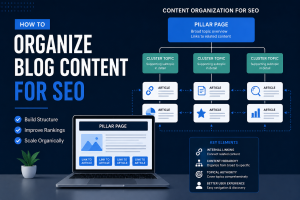
Instead of publishing isolated articles, your website becomes a connected structure built around:
- topic clusters
- internal linking
- topical authority
- strategic content hierarchy
👉 This is how search engines understand your expertise.
Why Most Websites Focus on the Wrong Thing
Most people think SEO success comes from:
❌ publishing more
❌ targeting more keywords
❌ chasing trends
The result?
- scattered content
- weak authority
- inconsistent rankings
This is why many affiliate websites struggle even after publishing dozens of articles.
🔵 Are You Publishing Content or Building a System?
If your content isn’t connected through internal linking and clear structure, you’re not building an SEO system.
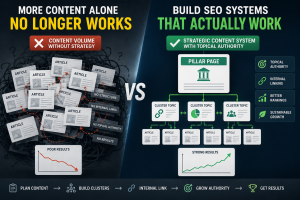
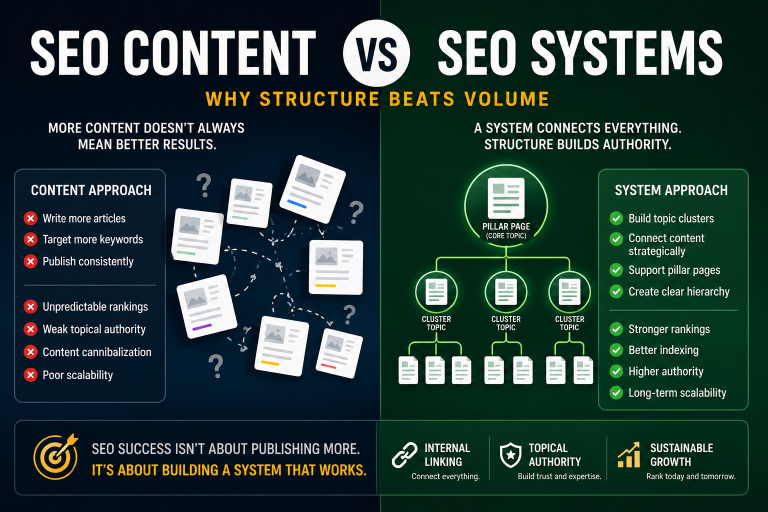
The Difference Between SEO Content and SEO Systems
Content Approach
Typical strategy:
- write articles
- optimize keywords
- publish consistently
Result:
❌ unpredictable rankings
❌ weak topical authority
❌ content cannibalization
❌ poor scalability
System Approach
Strategic structure:
- build topic clusters
- connect content properly
- support pillar pages
- create clear hierarchy
Result:
✔ stronger rankings
✔ better indexing
✔ higher authority
✔ long-term scalability
Why Structure Matters More Than Ever
Search engines have become significantly better at understanding relationships between topics.
Google no longer evaluates pages in isolation.
It evaluates:
- topical relevance
- content depth
- semantic relationships
- internal linking patterns
👉 This is exactly why topic clusters are so effective
Internal Linking Is the Backbone of SEO Systems
Without internal linking:
- pages stay isolated
- authority doesn’t flow
- search engines struggle to understand importance
A strong internal linking strategy helps transform scattered articles into a connected SEO architecture.
Why SEO Systems Work Better for Affiliate Websites
Affiliate websites depend heavily on:
- organic traffic
- trust
- consistent rankings
Without structure:
❌ traffic fluctuates
❌ rankings disappear
❌ articles compete against each other
With a system:
✔ articles support each other
✔ authority compounds over time
✔ rankings become more stable
Common SEO System Mistakes
1. Publishing Without a Plan
Random content creates weak topical signals.
2. Ignoring Internal Linking
Without links, pages remain disconnected.
3. Covering Too Many Topics
Authority requires focus.
4. Thinking Quantity Solves Everything
More content without structure creates more chaos.
How to Start Building an SEO System
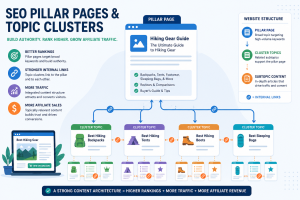
1. Choose a Core Topic
Focus on one niche area.
2. Create a Pillar Page
Build a comprehensive guide around the main topic.
👉 Example:
Topic Clusters for Affiliate Websites
3. Build Supporting Content
Create articles around related subtopics.
Examples:
- internal linking
- topical authority
- SEO structure
- affiliate SEO strategy
4. Connect Everything
This is where topical authority actually forms.
Every relevant article should support the overall structure.
Conclusion
SEO is no longer just about publishing content.
👉 It’s about building systems.
Once your content becomes:
✔ connected
✔ structured
✔ strategically organized
…your website becomes significantly easier for search engines to understand and trust.
And that’s where sustainable rankings begin.
🚀 Stop Publishing. Start Structuring.
If your website has content but still isn’t performing, there’s a good chance your SEO structure is the missing piece.
I offer a focused SEO Structure Audit where I identify:
- structural weaknesses
- internal linking gaps
- missed authority opportunities
👉 Get Your SEO Structure Audit