Most affiliate websites focus heavily on content creation — but ignore one of the most powerful ranking factors:
👉 internal linking.
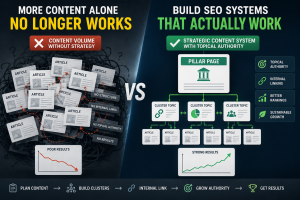
You can publish dozens of high-quality articles, but without proper linking between them, your content remains disconnected and underperforms.
In fact, internal linking is what transforms individual pages into a structured SEO system that search engines can understand and rank.
In this guide, you’ll learn how to build an internal linking strategy specifically for affiliate websites — and how to use it to boost rankings, traffic, and conversions.
Table of Contents
What Is Internal Linking?
Internal linking refers to the process of linking one page of your website to another page on the same domain.
Unlike external links, internal links help:
- search engines understand your site structure
- distribute authority across pages
- guide users through your content
But more importantly, internal linking connects your content into a topic cluster structure
Why Internal Linking Matters for Affiliate SEO
1. Helps Search Engines Understand Your Website
Search engines don’t just rank pages — they evaluate how pages relate to each other.
When your content is properly linked:
- Google understands topic relationships
- your site appears more authoritative
- indexing becomes faster and more efficient
2. Distributes Authority Across Pages
Some pages naturally attract more backlinks.
Internal linking allows you to pass that authority to other important pages, such as:
- product reviews
- affiliate landing pages
- conversion-focused content
This is a key part of building topical authority
3. Improves User Experience
Internal links guide visitors through your content.
Instead of reading one article and leaving, users:
- explore related topics
- spend more time on your site
- are more likely to click affiliate links
4. Supports Higher Rankings
Well-structured internal linking helps pages rank faster and more consistently.
Without it, even great content struggles to gain visibility.
How Internal Linking Fits Into Topic Clusters
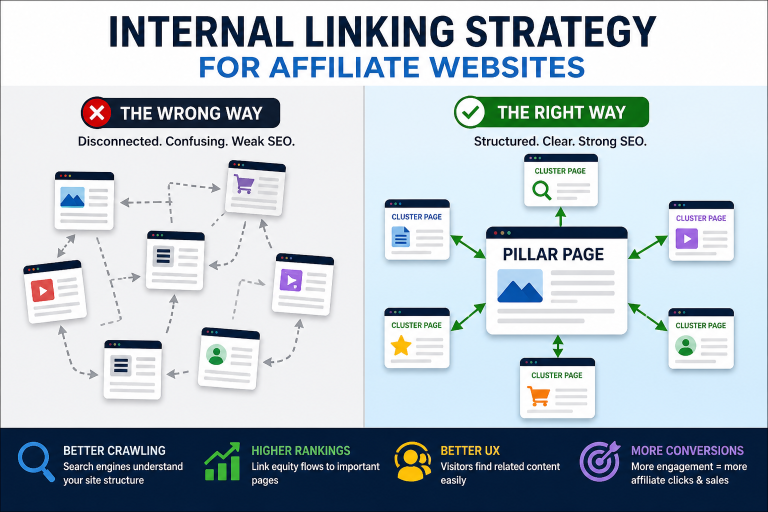
Internal linking is not random — it follows a structure.
In a proper system:
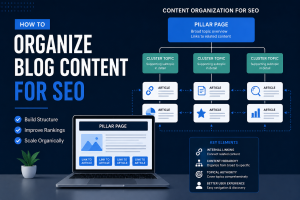
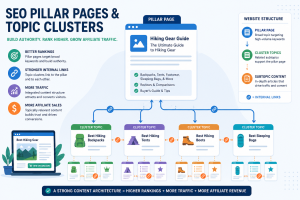
- cluster pages link to the pillar page
- pillar pages link back to clusters
- related clusters link to each other
👉 This is exactly how SEO systems outperform isolated content strategies
Step-by-Step Internal Linking Strategy
Step 1: Identify Your Pillar Pages
Start by defining your main topics.
These are your most important pages — the ones you want to rank for competitive keywords.
Example:
Step 2: Map Supporting Content
Each pillar should have multiple supporting articles (clusters).
For example:
- Internal linking strategy
- topical authority
- content structure
Each of these pages strengthens the main topic.
Step 3: Link From Clusters to Pillar
Every supporting article should link back to the main pillar page.
This tells search engines:
👉 “This page is part of a bigger topic.”
Step 4: Link From Pillar to Clusters
Your pillar page should link to all relevant cluster pages.
This creates a clear content hierarchy.
Step 5: Use Strategic Anchor Text
Avoid generic anchors like:
❌ click here
❌ read more
Instead, use descriptive anchors like:
✔ internal linking strategy for affiliate sites
✔ topic cluster structure
✔ SEO content systems
🔵 Not Sure If Your Content Is Structured Properly?
If your articles are not connected through a clear internal linking system, you’re likely losing rankings without realizing it.
Common Internal Linking Mistakes
1. Random Linking
Adding links without a clear structure weakens your SEO.
2. Too Few Links
If pages are not connected, search engines struggle to understand your site.
3. Over-Optimization
Using the same anchor text repeatedly can look unnatural.
4. Ignoring Important Pages
Your most valuable pages should receive the most internal links.
Best Practices for Affiliate Websites
- Link to your most important pages more often
- Keep linking natural and relevant
- Update older content with new links
- Build clusters instead of isolated posts
How Internal Linking Drives Conversions
Internal linking doesn’t just help SEO — it improves monetization.
When users move through your content:
- they gain trust
- they see more recommendations
- they are more likely to click affiliate links
👉 Structure = higher conversions
Conclusion
Internal linking is one of the most overlooked aspects of affiliate SEO.
Without it, your content remains fragmented.
With it, your website becomes a structured system that:
- ranks better
- keeps users engaged
- drives more conversions
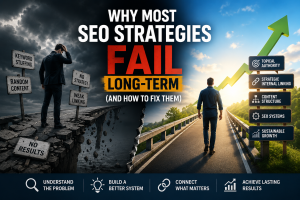
If you want consistent SEO results, you need more than content.
👉 You need structure.
🚀 Your Content Isn’t the Problem — Your Structure Is
If your website isn’t ranking the way it should, there’s a high chance your internal linking and content structure are holding it back.
I offer a focused SEO Structure Audit where I identify:
- internal linking gaps
- structural issues
- missed ranking opportunities
👉 Get Your SEO Structure Audit