When most people think about SEO, they focus on keywords, backlinks, and publishing more content. While those elements still matter, modern search engines have evolved far beyond simple keyword matching.
Today, Google attempts to understand websites contextually. It analyzes how pages relate to each other, how topics are organized, and whether your content structure demonstrates real topical authority.
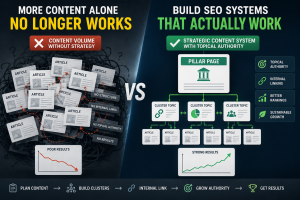
This is why some websites with fewer articles outperform larger websites with hundreds of disconnected blog posts.
In this guide, we’ll break down how Google understands website structure, why content relationships matter, and how proper organization can significantly improve your SEO performance.
Table of Contents
What Is Website Structure in SEO?
Website structure refers to how your pages and content are organized and connected.
This includes:
- navigation menus
- categories
- internal links
- topic hierarchy
- URLs
- content relationships
Think of your website as a map.
A well-structured website helps both:
- users navigate content easily
- search engines understand topic relevance
Poor structure creates confusion.
Even high-quality content can struggle to rank if Google cannot clearly understand how pages relate to one another.
Why Website Structure Matters to Google
Google’s goal is not simply to index pages individually. Its goal is to understand the broader context of your website.
Search engines analyze:
- which pages are most important
- which topics your site focuses on
- how content supports other content
- whether your website demonstrates expertise in a subject area
When your structure is clear, Google can:
- crawl pages more efficiently
- distribute authority better
- understand topical relevance
- identify content relationships
- rank pages more confidently
This is one reason why websites with strong architecture often outperform websites publishing random standalone articles.
How Google Crawls and Understands Websites
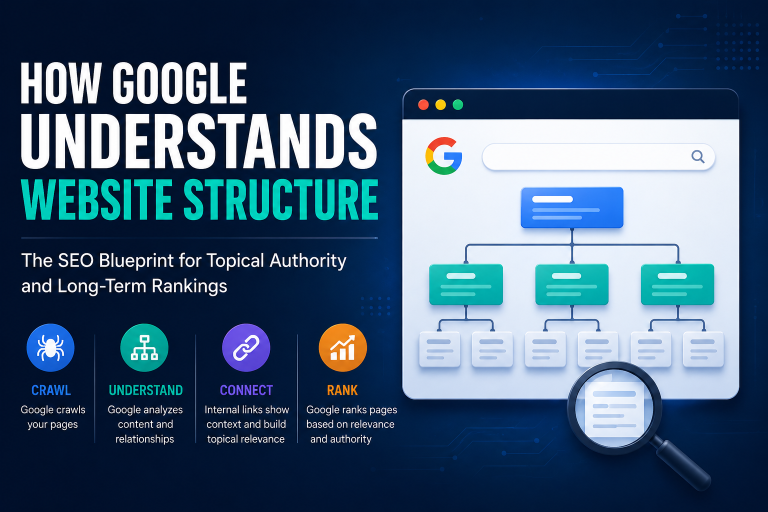
Google uses bots known as crawlers to discover and analyze pages.
These crawlers move through websites primarily by following links.
This means your internal linking structure directly affects:
- discoverability
- indexing
- crawl efficiency
If pages are isolated or poorly connected, Google may:
- crawl them less often
- misunderstand their importance
- fail to associate them with broader topics
A strong website structure creates logical pathways that help search engines interpret the relationship between pages.
The Role of Internal Linking
Internal linking is one of the strongest structural signals you control.
Every internal link helps Google understand:
- page relationships
- topic relevance
- hierarchy
- authority flow
For example:
If several articles about affiliate SEO all link to a central guide about topical authority, Google begins understanding that the pillar page is highly important within that subject area.
Strategic internal linking helps:
- reinforce expertise
- strengthen topical clusters
- distribute authority across the website
- improve user navigation
This is why internal linking should never be treated as an afterthought.
Topic Clusters and Semantic Relationships
Modern SEO increasingly revolves around semantic understanding.
Google no longer looks only at individual keywords. It evaluates broader topic relationships.
This is where topic clusters become extremely important.
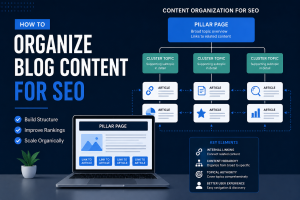
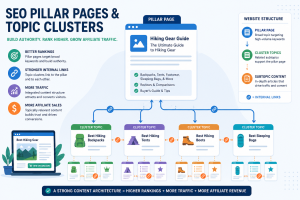
A topic cluster consists of:
- one main pillar page
- multiple related supporting articles
For example:
Pillar Topic
SEO Systems
Cluster Articles
- Internal Linking Strategy
- Topical Authority
- Website Structure
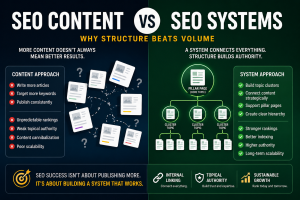
- SEO Content vs SEO Systems
- Pillar Pages Explained
This structure helps Google understand that your website covers the topic comprehensively.
Instead of isolated articles competing individually, your content works together to reinforce authority.
Pillar Pages Explained
Pillar pages are central pieces of content that broadly cover an important topic.
They act as the foundation of topic clusters.
A good pillar page:
- covers a topic comprehensively
- links to supporting content
- organizes related subtopics
- strengthens semantic relevance
Google often uses these pages to understand:
- primary expertise areas
- content hierarchy
- topical focus
Without pillar pages, websites often feel fragmented from an SEO perspective.
Why Content Hierarchy Matters
Content hierarchy helps search engines determine:
- which pages are most important
- how topics connect
- where authority should flow
For example:
Homepage
→ SEO Category
→ Topic Cluster
→ Supporting Articles
This creates logical organization.
Without hierarchy:
- content becomes disconnected
- authority gets diluted
- topic relevance weakens
Many websites publish articles randomly without considering how they fit into the broader SEO structure.
That limits scalability significantly.
Common Website Structure Mistakes
Many websites unknowingly hurt their SEO with weak structure.
Common issues include:
1. Random Content Publishing
Publishing articles without topical planning creates disconnected content.
2. Weak Internal Linking
Pages remain isolated without strong contextual relationships.
3. Too Many Competing Topics
Websites attempt to cover too many unrelated subjects.
4. Poor Navigation
Important pages become difficult for both users and crawlers to find.
5. No Pillar Strategy
Without central authority pages, topic signals become weaker.
How to Improve Your Website Structure
Improving website structure does not necessarily require rebuilding your website entirely.
Often, small strategic improvements create major impact.
Step 1: Identify Core Topics
Focus on the main subjects you want your website associated with.
Avoid publishing unrelated content simply for volume.
Step 2: Build Topic Clusters
Organize content into clear pillar-and-cluster systems.
Each cluster should support a central topic strategically.
Step 3: Improve Internal Linking
Create contextual links between related pages naturally.
Avoid generic anchors like:
- click here
- read more
Instead, use descriptive anchor text.
Step 4: Strengthen Content Hierarchy
Make sure your:
- categories
- navigation
- URLs
- page relationships
support your core SEO goals.
Step 5: Update Older Content
Many websites already have valuable content but lack proper connections.
Adding:
- internal links
- related articles
- supporting sections
can significantly improve structural clarity.
Website Structure and Topical Authority
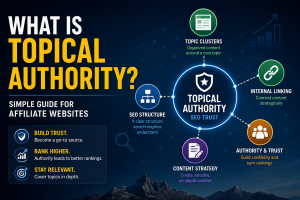
Topical authority is heavily influenced by structure.
Google wants to see:
- depth
- consistency
- semantic relationships
- connected expertise
Strong structure signals that your website:
- genuinely understands the subject
- covers topics comprehensively
- provides organized expertise
This is why websites with smaller content libraries can outperform much larger competitors.
Quality structure often beats random scale.
Internal Linking Suggestions
You can connect this article naturally with:
- Topic Clusters for Affiliate Websites
- Internal Linking Strategy for Affiliate Websites
- Why Most Affiliate Content Doesn’t Rank
- What Is Topical Authority?
- SEO Content vs SEO Systems
You can also internally link to:
- Services page
- Homepage
- SEO Structure Audit section
Your Content May Not Be the Problem
Many websites publish good content consistently but still struggle to rank competitively.
In many cases, the real issue is structure.
If your website lacks:
- clear topic hierarchy
- internal linking strategy
- topical organization
Google may struggle to fully understand your expertise.
👉 Brisk Web Services helps businesses build connected SEO systems focused on structure, authority, and long-term scalability.
Conclusion
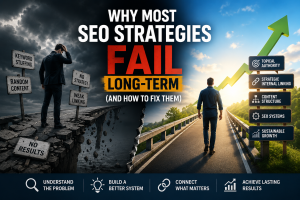
Modern SEO is no longer just about publishing more content.
Search engines increasingly reward websites with:
- clear structure
- connected topics
- semantic relationships
- strong internal linking
- organized authority
Understanding how Google interprets website structure can dramatically improve how your content performs over time.
Instead of treating every article as an isolated page, successful websites build connected ecosystems that reinforce expertise and topical relevance.
The stronger your structure becomes, the easier it becomes for both users and search engines to understand what your website truly represents.